Showing posts with label Fiscal Policy. Show all posts

Sunday, 19 June 2016

"We Have Reached The Point That Keynes Warned Of In His General Theory" | Zero Hedge

"We Have Reached The Point That Keynes Warned Of In His General Theory"


Now that new warnings about failing central bank policy are emerging every single day, from Deutsche BankCitigroup and Bank of America, among others, here courtesy of Bloomberg's Christopher Maloney is a brand new one, one which take a different angle, and suggests that none other than Keynes predicted just the "dead end" outcome that the world finds itself in right now.
Here is the full warning from Bloomberg's Chris Maloney
We have arguably reached the point that Keynes warned of in his General Theory where demand for money and credit to satisfy what he labeled “non-speculative” motives has been more than satisfied; which brings us to this week’s money supply report. 

The main beneficiary of growth in available money and credit since the Fed combined ZIRP and QE in the end of 2008 has been financial markets. An example is the outsized aggregate percentage growth in U.S. equity markets compared to the tepid pace for GDP.

As the default response (incorrectly labeled “Keynesian”) of the Federal Reserve to any sign of economic or market stress seems to be ever more “stimulus” this trend is likely to continue; the greater near-term risk for UST rates is for a rally, not a sell off.

M2 measure of the money supply grew at 6.8% y/y clip in May, its fourth m/m yearly increase in a row and its fastest increase since Oct. 2013.

Yet more money and credit would be superfluous as we have likely passed the point where the demand for money to satisfy what Keynes labeled “non-speculative” motives is sated.

He wrote such demand, once sated, is no longer responsive “to any influence except the actual occurrence of a change in the general economic activity and the level of incomes” (pp.194-197) both  of which have been muted, at best.

In the ZIRP/QE-era we have seen demand for money for what Keynes labeled the “speculative-motive” take the reins, as this demand “usually shows a continuous response” to changes in the prices of bonds and debts (p.197).

Such speculative demand is a bottomless pit and dangerous lure; it also engenders an explosion in outstanding debt, highlighted by the surge of debt issued by the U.S. Federal govt post-recession.

M2’s monthly y/y growth averaged 6.3% from the end of 1999 to the beginning of 2009; since then it has increased to 6.5%, and still the prevailing sentiment is against any tightening of monetary policy.

At this point it is likely central bankers are “pushing on a string,” positively affecting prices for the financial markets’ flavor of the month but doing nothing for actual economic activity.
* * *
At this rate of collapsing faith in monetary policy, very soon it will be "contrarian" to say that central banks actually have any idea what they are doing.

Saturday, 18 June 2016

So You Didn’t Get Rich… | International Man

So You Didn’t Get Rich…


Editor’s Note: Today we’re taking a look at a legendary essay on wealth-building by our friend Mark Ford. Many folks who read this essay call it an “eye-opener.” In it, Mark explains how to consistently build your wealth, even in a terrible economy.
Mark has more insight into this than most. He’s built dozens of businesses from scratch… creating millions of dollars of wealth in the process. Mark knows more about building wealth than just about anyone.
Today, he explains how you can gain financial independence… even if you think it’s too late.

Waa! It’s not fair!
We baby boomers were told that if we worked hard and saved, we could spend the last quarter of our lives living comfortably and free from financial worries. Our parents told us. Our employers told us. Even the government told us.
How often, during our years of toil, did we daydream about those future days? The leisurely breakfasts, the afternoons golfing, dinners with friends, weekends with our grandchildren…
(Note to younger people: Don’t stop reading. What I’m saying here applies to you too—in spades!)
But now that we are reaching retirement age, the promise is beginning to feel like a fraud.

Friday, 17 June 2016

Immigration Economics: Illegal Aliens Are Our Bread and Butter - The Great Recession Blog

Illegal Aliens Are Our Bread and Butter


Have you ever wondered why politicians make some immigration illegal and then turn a blind eye to illegal immigration wherever it is happening … for decades? What about why they talk so much about building walls to keep out the vast hoards, rather than simply arresting the much smaller number of people who hire illegal immigrants? Surely drying up the jobs that are available to illegal immigrants would be much more economical than building a thousand-mile wall. This article will tell you why we make some immigration illegal and then turn a blind eye to it.
Have you also wondered why politicians make it illegal for millions of people to enter the country and then eventually support naturalizing those people who broke the laws these very politicians made? This article will answer that, too.
First, I’ll state that immigration is largely about economics; and by that I do not simply mean that people are coming to the U.S. to gain economic opportunity, though, of course, they are. Nor do I simply mean immigrants are taking jobs away from Americans, though, of course, they are. Nor am I going to talk about the welfare costs that come with migrant workers because those get discussed a lot.
I want to talk about a major economic factor in the immigration issue that is the elephant in the room that no one is talking about, and it’s not just a GOP elephant. Immigration economics has a dark underbelly that neither party will ever bring up. Since immigration reform is one of the major planks of the Republican’s top candidate for the presidency, there is no time like the present to talk about the elephant.

Thursday, 16 June 2016

The Federal Reserve has brought back “taxation without representation” – Sovereign Man

The Federal Reserve has brought back “taxation without representation”


In February 1768, a revolutionary article entitled “No taxation without representation” was published London Magazine.
The article was a re-print of an impassioned speech made by Lord Camden arguing in parliament against Britain’s oppressive tax policies in the American colonies.
Britain had been milking the colonists like medieval serfs. And the idea of ‘no taxation without representation’ was revolutionary, of course, because it became a rallying cry for the American Revolution.
The idea was simple: colonists had no elected officials representing their interests in the British government, therefore they were being taxed without their consent.

Cassandra's Legacy: Social Equality and the Destruction of the Planet

Social Equality and the Destruction of the Planet


In this post, Jacopo Simonetta asks a fundamental (and politically incorrect) question: are we sure that social equality would be good for the environment? The answer turns out to be not politically very correct. (U.B.)


by Jacopo Simonetta


Exaggerated inequality is surely a major problem in today's societies, and it keeps increasing. I, too, certainly believe that this scandal must end, but the topic of the article is another one: is it true that redistribution of wealth would have a good effect on the Earth health? Many very influential people believe this, but I am not so sure.

Evidently, affluent people consume much more than poor people do, but how much? As far as I know, there are no studies correlating the environmental impact and social classes but, as starting point, we could compare how CO2 emissions change with income. (data Word Bank and Wikipedia respectively).  


Cont...... 

15 Facts About The Imploding U.S. Economy That The Mainstream Media Doesn’t Want You To See | Zero Hedge

15 Facts About The Imploding U.S. Economy That The Mainstream Media Doesn’t Want You To See


You are about to see undeniable evidence that the U.S. economy has been slowing down for quite some time.  And it is vital that we focus on the facts, because all over the Internet you are going to find lots and lots of people that have opinions about what is going on with the economy.  And of course the mainstream media is always trying to spin things to make Barack Obama and Hillary Clinton look good, because those that work in the mainstream media are far more liberal than the American population as a whole.  It is true that I also have my own opinions, but as an attorney I learned that opinions are not any good unless you have facts to back them up.  So please allow me a few moments to share with you evidence that clearly demonstrates that we have already entered a major economic slowdown.  The following are 15 facts about the imploding U.S. economy that the mainstream media doesn’t want you to see…

Wednesday, 15 June 2016

The Rape of the West « The Burning Platform

The Rape of the West


I wanted to find a less ugly title for this article, but I couldn’t find one that still conveyed the depth of the crimes that are under way. So, apologies where they are due.
In this post, I’m going to give you an overview of what is going on and an outline of how the schemes work. I am not going to “prove” everything I write with citations and math. That’s an important thing to do, but today I’ll pass. If you doubt anything I write here, do your own research: Find the facts, question them, compare them, and forge your own opinions.

What’s Happening

Right now, people who can fairly be called the “ruling elite” are bleeding the West dry, and many of them are fully aware of what they’re doing. Others are simply “doing what works” and hiding behind slogans like “it’s all legal” that help them bypass morality.
Cont...  

Tuesday, 14 June 2016

The Ron Paul Institute for Peace and Prosperity : Fascism: A Bipartisan Affliction

Fascism: A Bipartisan Affliction


undefined

If neoconservatives and progressives truly understood fascism, they would stop using the word as a smear term. That is because both groups, along with most political figures and commentators, embrace fascist ideas and policies.

Fascism’s distinguishing characteristic is a “mixed economy.” Unlike socialists and communists who seek to abolish private business, fascists are content to let business remain in private hands. Instead, fascists use regulations, mandates, and taxes to control business and run (and ruin) the economy. A fascist system, then, is one where private businesses serve politicians and bureaucrats instead of consumers. Does the modern American economy not fit the definition of fascism?

Fascism benefits big businesses that can afford the cost of complying with government regulations, unlike their smaller competitors. Big businesses, which have more political influence then entrepreneurs or small businesses, also significantly benefit from government subsidies. In order to maintain their power, big businesses finance the “deep state” — the network of lobbyists, journalists, think tanks, bureaucrats, and congressional staffers who work behind the scenes to shape government policy.

Obamacare is an example of fascism that is often mislabeled as socialism. Obamacare did not create a government-run “single payer" system as would exist under socialism. Instead, Obamacare extended government control over health care via mandates, regulations, and subsidies. The most infamous part of Obamacare — the individual mandate — forces individuals to purchase a product from a private industry.


Cont...... 

Monday, 13 June 2016

Frustrations of Telling the Truth -- Paul Craig Roberts - PaulCraigRoberts.org

Frustrations of Telling the Truth


Paul Craig Roberts
Some readers who read the sample of appreciation expressed for my columns (http://www.paulcraigroberts.org/2016/06/07/quarterly-call-for-your-support/ ) want to know about the abuse.
Why not.
Some examples: If I criticize the Israeli government for abusing Palestinians and stealing their country, the Israel Lobby accuses me of being an anti-semite who wants to repeat the holocaust. In the same batch of emails, anti-semites denounce me for being too easy on Israel and covering up for the Jewish conspiracy against mankind.
When I write about the One Percent using the government to loot the economy, I receive emails blaming me because I worked for Reagan “who started it all by cutting tax rates for the rich.”
These people have no conception of supply-side economics, its purpose, success, and the way it prepared the way for Reagan to negotiate the end of the Cold War. At one point in their lives they read a left-wing screed against Reagan, and that is the extent of their understanding. But they are full of blind hate.

Saturday, 11 June 2016

An Everyman's Guide To Understanding Cryptocurrencies | Zero Hedge

An Everyman's Guide To Understanding Cryptocurrencies


When an asset rises by almost 30% in a few weeks, it tends to attract attention.  Recently, that asset was bitcoin (BTC). The price of BTC in dollars rose from $454 on May 23 to $590 on June 6th.
When an asset doubles in a matter of a few months, it tends to attract attention.  The cryptocurrency Ether (part of the Ethereum platform) doubled from around $7 in April to roughly $14 in early June.
Are these cryptocurrencies mere fads? Or are they potentially game-changing alternatives to the conventional currencies such as the U.S. dollar, Chinese RMB, Japanese yen or European Union euro?
There’s no lack of skeptics and critics of bitcoin and other cryptocurrencies. For example, “National currencies aren’t as Centralized, and Bitcoin isn’t as Decentralized, as you think.” (Source)
There are plenty of defenders of cryptocurrencies as well, for example this response to the article above. 
The controversy is understandable; bitcoin has had a difficult adolescence. After soaring from $15 in early 2013 to over $1,000 in December 2013, the cryptocurrency crashed to $215 in early 2015 in the wake of the bankruptcy of a major exchange (Mt. Gox) that cost bitcoin investors $470 million in losses.
Yet despite concerns about security, criminal use and volatility, cryptocurrencies have proliferated at a dizzying pace, and new models such as the “smart contracts” of Ethereum have been developed.
So what are those of us who can’t follow the technical arguments supposed to make of all this? For that audience, here's my stab at making sense of the potential global role of cryptocurrencies.

Friday, 10 June 2016

How Fascism Comes to America | International Man

How Fascism Comes to America 


I think there are really only two good reasons for having a significant amount of money: To maintain a high standard of living and to ensure your personal freedom. There are other, lesser reasons, of course, including: to prove you can do it, to compensate for failings in other things, to impress others, to leave a legacy, to help perpetuate your genes, or maybe because you just can't think of something better to do with your time.
But I'll put aside those lesser motives, which I tend to view as psychological foibles. Basically, money gives you the freedom to do what you'd like – and when, how, and with whom you prefer to do it. Money allows you to have things and do things and can even assist you to be something you want to be. Unfortunately, money is a chimera in today's world and will wind up savaging billions in the years to come.
As you know, I believe we're well into what I call The Greater Depression. A lot of people believe we're in a recovery now; I think, from a long-term point of view, that is total nonsense. We're just in the eye of the hurricane and will soon be moving into the other side of the storm. But it will be far more severe than what we saw in 2008 and 2009 and will last quite a while – perhaps for many years, depending on how stupidly the government acts.

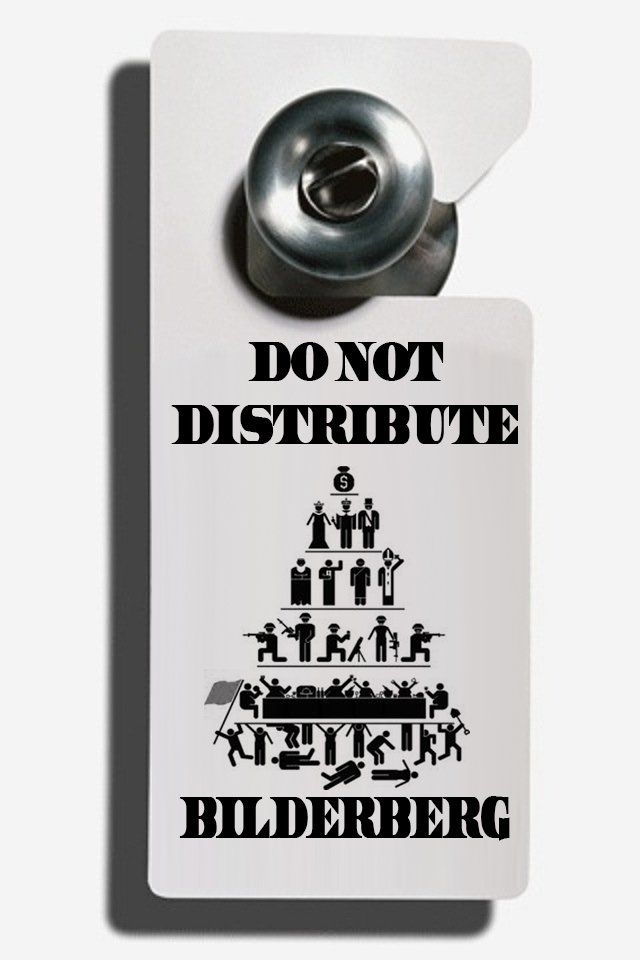
BILDERBERG DOOR HANGER « The Burning Platform

BILDERBERG DOOR HANGER


Thursday, 9 June 2016

On Death And Taxes: "The Greed Of The Government Can Never Be Overstated" | Zero Hedge

On Death And Taxes: "The Greed Of The Government Can Never Be Overstated"


Readers, you’re awake to the horrors of the Federal Government, our rapidly-declining GDP and ever-increasing debts.  Trillions of dollars have been stolen, in the form of appropriations and programs that funnel directly from the tax-base: the fat “cash-cow” that the government suckles from.  The taxes are life-sustaining to the government juggernaut, managed by the ever self-serving “representatives” of Congress who approve pay raises for themselves, immunity from prosecution from (what was formerly) insider trading, and exonerate themselves from any and all ethics violations.
Taxes keep the government going, keep the system emplaced and you the citizen in your place, from birth to death.  The websiteivn.us reports the breakdown for the federal government’s feedings:
Personal income taxes               47.4%
Corporate income taxes             34.1%
Social insurance taxes                9.9%
Tariffs/gas taxes/fees                 8.5%
Ben Franklin summarized the position of the average citizen two centuries ago:
“In this world nothing can be said to be certain, except death and taxes.”
Franklin was correct; however, he should have reversed the order, because taxes can both bring on death and still haunt the deceased after their passing.  The best example of this is the death tax, where a person’s estate is assessed after their death.  Their heirs better pay the tax man!  Yes, how exactly does all of that work?  The deceased individual worked all of their lives, paying income taxes both federal and state, paying off their house and mortgage, paying their property tax.

Only Two Countries Do This Appalling Thing - And The U.S. Is One Of Them | Zero Hedge

Only Two Countries Do This Appalling Thing - And The U.S. Is One Of Them


This story may unnerve you...
It’s the story of how Eritrea, a tiny, mostly unheard-of country in East Africa, and the United States, do the same awful thing.

Extortion and Threats of Violence

Nearly every country in the world bases its tax system on residency rather than citizenship. If you’re an Italian citizen, and you leave Italy to live and work in Dubai, you don’t have to pay taxes on the income you earn abroad to the Italian government.
But Eritrea levies a 2% flat tax on its citizens who live abroad. If you’re an Eritrean citizen, you have to pay taxes to the Eritrean government, no matter where you live and work.
The media has condemned this as “extortion” and a “repressive” measure by an “authoritarian” government.
The UN has even weighed in. In Resolution 2023, the UN Security Council condemned Eritrea for “using extortion, threats of violence, fraud and other illicit means to collect taxes outside of Eritrea from its nationals.”
You might be wondering, “What’s the controversy? Eritrea is getting criticized, and rightly so.”
That brings us to the only other country on the planet with a similar tax system… the United States.

It Took $10 In New Debt To Create $1 Of Growth In The First Quarter | Zero Hedge

It Took $10 In New Debt To Create $1 Of Growth In The First Quarter


When the Fed unexpectedly stopped reporting the data for Total Credit Market Instruments in September 2015, the most comprehensive series of total credit in the US economy, there were many screams of disappointment and frustration from US debt watchers. However, this was unnecessary, as all the Fed did was break up the series into its two constituent components: total debt (found here) and total loans (found here).
So today we had a chance to update the total US credit following the release of the Fed's Flow of Funds (Z.1) statement, which is usually parsed for its tracking of changes to household wealth. And while it showed that in  the first quarter the net worth of US residents, mostly the wealthy ones as the bulk of financial assets is held by a small fraction of the total population, rose by $837 billion to $88 trillion mostly as a result of a change in real estate holdings, we were more interest in the aggregate picture.
It wasn't pretty.
As a reminder, according to the latest BEA revision, nominal Q1 GDP was $18.23 trillion, an increase of just $65 billion from the previous quarter or an annualized 0.7% rate, the question is how much credit had to be created to generate this growth. Well, according to the Z.1, total credit rose to a new record high $64.1 trillion. This was an increase of $645 billion from the previos quarter. It means that in the first quarter, it "cost" $10 in new debt to generate just $1 in new economic growth!

Wednesday, 8 June 2016

PICTURE OF DECLINE « The Burning Platform

PICTURE OF DECLINE


A population of illiterate, non-thinking morons can’t possibly obtain good paying jobs. This country spends $12,000 per public school student per year on education and this is the outcome? The factual data presented below paints a picture of an empire in rapid decline. We are too far gone. No amount of money or presidential election is going to change this course. We chose this path in the 1960s and now we will reap the consequences.

Education

  • In a study of literacy among 20 ‘high income’ countries; US ranked 12th
  • Illiteracy has become such a serious problem in our country that 44 million adults are now unable to read a simple story to their children.
  • 50% of adults cannot read a book written at an eighth grade level
  • 45 million are functionally illiterate and read below a 5th grade level
  • 44% of the American adults do not read a book in a year
  • 6 out of 10 households do not buy a single book in a year

Economy

  • According to the Pew Research Center, the median income of middle-class households declined by 4 percent from 2000 to 2014.
  • There are still 900,000 fewer middle-class jobs in America than there were when the last recession began, but the population has grown significantly larger since that time.
  • According to the Social Security Administration, 51 percent of all American workers make less than $30,000 a year.
  • An astounding 48.8 percent of all 25-year-old Americans still live at home with their parents.
  • According to the U.S. Census Bureau, 49 percent of all Americans now live in a home that receives money from the government each month, and nearly 47 million Americans are living in poverty right now.
  • In 2007, about one out of every eight children in America was on food stamps. Today, that number is one out of every five.
  • The median net worth of families in the United States was $137, 955 in 2007. Today, it is just $82,756.